
Opening a drug rehab is a noble initiative, and many people relinquish this opportunity to serve their people the right way. Starting a substance abuse treatment center requires proper medical guidelines, licensing, comprehensive business planning, and market research to stand out in the services and behavioral health industries. Many entrepreneurs start drug rehab without any prior planning and guidelines, which ends in a tangle of difficulties. This blog explains how to open a drug rehab center, a complete Behavioral Health Business, and a smooth opening of a thriving drug rehab center.
Feasibility Analysis
Before beginning a business startup, you must ensure some feasibility criteria are met to assess your capabilities and interest in running a successful behavioral health business. You must ask yourself some questions, such as:
- Is it the right time to process?
- Are you capable of handling the complexities?
- What are your goals for running a drug rehab?
- Do you have enough resources for the long-term running of your business?
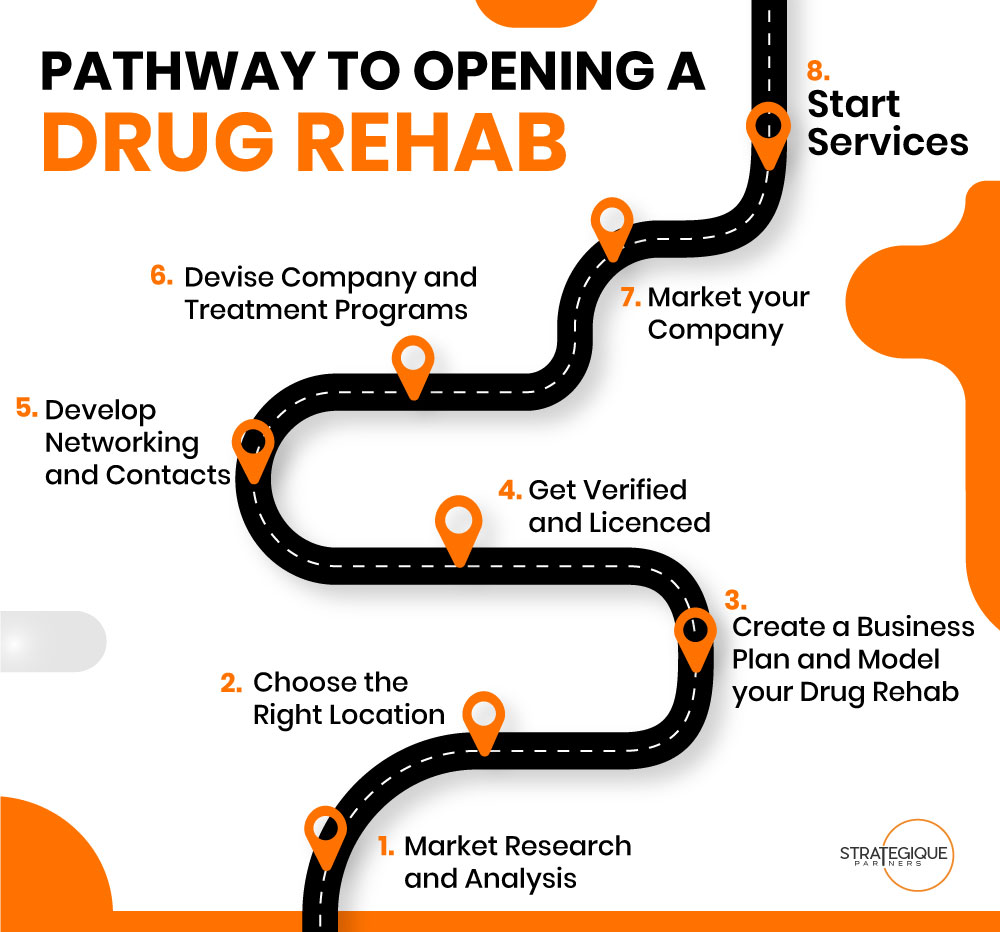
After you are clear, the next step is to plan a formal business idea with a 7-step guide, as mentioned below.
7-Step Guide for a Successful Drug Rehab Business
Step#1. Devise a Business Plan
To embark on a profitable and exceptional drug rehab startup journey, one must devise a comprehensive business plan that covers all the business’s developmental expenses and financial aspects. It may include the following points before beginning.
a. Market Analysis
Conducting a thorough analysis of the market you are getting into is a crucial step toward establishing competitive drug rehab. During market research, you should consider the following points:
- Know about the potential clients around your location
- The financial status of the city/state
- Services offered by competitors
- What is the success rate of drug rehab
- Determine the needs of your clients
In this way, you will better understand how your drug rehab will perform and the potential feasibility of your desired goals and achievements.
b. Determining Startup Cost
Before beginning, you will probably wonder how much do drug rehab centers cost. Therefore, it’s necessary to estimate startup costs generally during budget planning to clear the gist of the business. Drug rehab startup costs should include the following:
- Building rent/ lease payment
- Insurance, Licensing, and accreditation budget
- Cost of therapy tools and working equipment
- Launching cost
Devising a perfect startup allocation remarkably impacts new clients, ensuring credibility and building trust in the behavioral health market.
c. Financial Allocation
After startup costs come financial planning, which makes a successful business model. To start a drug rehab business in the highly competitive market of the United States, one must allocate a sufficient budget to:
- Staff salaries
- Marketing expenses
- Operational costs
- Facility maintenance
- Administrative cost
- Technical infrastructure
Therefore, make sure to have proper resources or have secured grants for starting a drug rehab center before you begin the virtuous journey of behavioral health treatment.
d. Advertising and Marketing
Advertising is the most crucial step in raising awareness and, at the same time, generating potential leads. Marketing includes
- Digital Press release
- Website development
- Social Media Marketing
- Content Marketing for Awareness and Guides
- Email Marketing
- Pay Per Click Advertisement
In the digital marketing era, online presence is crucial for marketing your business venture, promising great success potential.
e. Technology Integration
How will you manage all the business dealings and keep track of progress from time to time? Well, the answer lies in the seamless integration of the latest technology, like Customer Relationship Management tools and software that helps in:
- Data Tracking & Outcome Management
- Keeping records of clients
- Assist in administrative services
- Billing and insurance management
- Handling day-to-day complex operations
To plan your business efficiently, you need expert advisory that ensures everything goes as planned. Strategique Partners provides all operational and regulatory services for future entrepreneurs in the drug rehab industry!
Step#2. Choose Ideal Location
Finding the perfect location is the next step for a drug rehab establishment. Your location must be up to the standards of market feasibility and provide client and staff-centric approach to further location requirements, including:
a. Buying/ Renting/ Leasing Facility
Plan what type of facility you will target for rent/ lease. Or are you financially strong enough to buy the location? The facility target depends on the following:
- Types of treatment programs offered, such as drug addiction treatment and mental health treatment
- Treatment modules such as outpatient, intensive outpatient, or inpatient
- Number of beds
- Facility plan
Real estate advisory can help you strategize your ideal location goals.
b. Zoning Laws
To ensure a “not in my backyard policy” for your business venture, you must search for local zoning laws that protect societal integrity and provide judgment-free services to your clients.
c. Ease of Access
Look for a suitable location that is in the center of the market, providing easy access to:
- Hospitals
- Pharmacy
- Healthcare provider
- Easy road access
- Parking facility
- Departmental store
Also, keep in mind a safe and secure environment for your clients offering care-free services.
d. Transportation Services
Availability and access to public transport are essential for clients to commute conveniently from your drug rehab location. You can also provide transportation services for their convenience.
Step#3. Complete your Accreditation and Licensing
For drug rehab, you may require:
- Business License
- Health department permit
- Zoning permit
- State license
- Federal provider number
- Necessary professional certification
- CARF and JCO accreditation for Medicare and Medicaid coverage
Our legal experts in accreditation and licensing services can guide you with the cost and required documentation for your credibility.
Step#4. Hire Expert Staff for Excellence in Management
Your drug rehab should contain expert, qualified staff that play vital roles in running a successful drug rehab, including:
a. Executive Staff
It includes:
- Chief Executive Officer
- Chief Operational Officer
- Chief Financial Officer
- Medical Director
That will run your business operations and legal requirements to keep your legality current with the market standards.
b. Administrative Staff
Clerical and administrative staff will keep your daily task scheduling and log updated, including patient files, licensing, receipt management, calling, billing, etc.
c. Medical Personnel
It will include:
- Psychiatrist
- Doctors
- Substance abuse treatment specialists
- Pharmacist
- Nurses
That will provide the backbone of your facility.
d. Supporting Staff
It should include the following:
- Janitorial staff
- Goods keeper
- Security personnel
- Marketer
That will ensure the facility’s maintenance and day-to-day minor chores. Expert staffing with a proper patient-to-staff ratio balance provides a positive environment and smooth treatment operations.
Step#5. Offer Exceptional Drug Rehab Services
To make your business stand out from the rest, you should provide exceptional services of drug rehab such as:
a. Drug Detox
Providing complete catharsis from the drug while managing FDA-approved medication-assisted treatment.
b. Residential Treatment
Inpatient services treatment provides the highest level of care and effective drug rehab that guarantees lasting sobriety and better outcomes.
c. Outpatient Support
Offering flexible scheduling according to the patient’s need and feasibility in outpatient treatment.
Step#6. Provide Comprehensive Insurance Coverage
Clients need more than just treatment in drug rehab, and insurance providence is one of that convenience.
- State-funded, specific for each state
- Federal funding such as Medicare, Medicaid, and Tricare
- Private insurance
Insurance cuts costs, attracts clients, and smooths the treatment process for business owners and patients.
Step#7. Establish Collaboration with Partners
Partnerships are one of the best ways to grow any business in a thriving manner. Drug rehab progresses when you have contact with healthcare providers and competitors that ensure the best client services and networking versatility. Keep advisors at your disposal to build relationships with partnering communities in the behavioral health industry.
Let’s Start Together with Strategique Partners
Still, complexities such as cost analysis, pricing, and more should be devised under expert guidance from someone adept at running drug rehab businesses for years. Strategique Partners has years of expertise in behavioral health business ventures and establishing quality services for patients with substance abuse treatment needs. We also provide
- M&A Advisory for Buying and Selling of Drug Rehab
- Program Development and Management Services
- Financial management and Finance Valuation for Drug Rehab
Book your Free Appointment with our Experts Today!
Frequent Queries You May Ask About Drug Rehab Operations
Drug rehab entrepreneurs may ask some questions, such as:
How to Open a Drug Rehab Center in Florida
Drug rehab centers in Florida follow the same process as depicted in the blog guide, except SAMHPO and PLAD fulfill the licensing requirements to legitimize your business as a medical entity in the state.
How to Open a Drug Rehab Center in California
After following each step as mentioned above, some state-specific licensing is required for drug rehab operations in California, such as:
- Fill out the initial treatment provider application (DHSC 6002)
- Complete fire inspection
- Obtain zoning permit
- Get at least one American Society of Addiction Medicine (ASAM) certification.
- Pay the fees after deciding your state and regular certification according to your business plan.
Begin your services under professional consultancy.
How Much Do Drug Rehab Centers Cost
Drug rehab center startup cost varies from state to state and is location-specific. However, depending on your desired business model, an initial estimate may vary from $200,000 to $1,000,000.
How to Obtain Grants for Starting a Drug Rehab
Every grant, whether it is federal or state-funded, needs some general work such as:
- Research grant and funding opportunities in your state and location
- Review and fulfill requirements specific to obtaining grants
- Prepare grant or funding proposal
- Submit your proposal to the relevant department
- Keep track and follow-ups